




Verification engine
9checks on every
checks on every
address
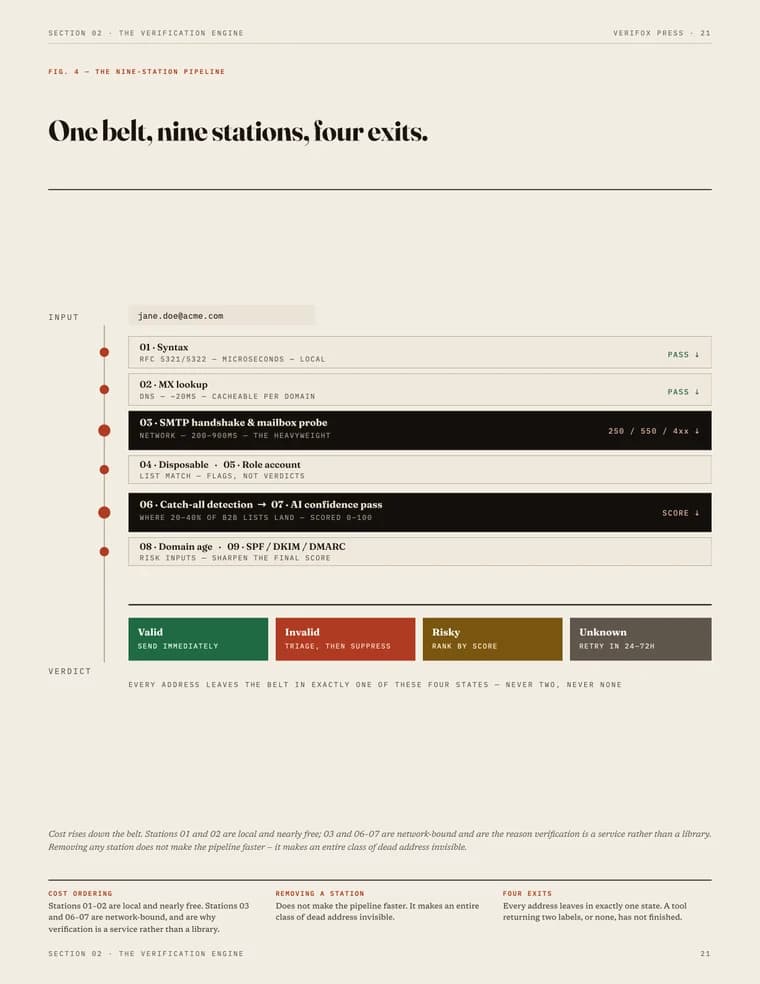
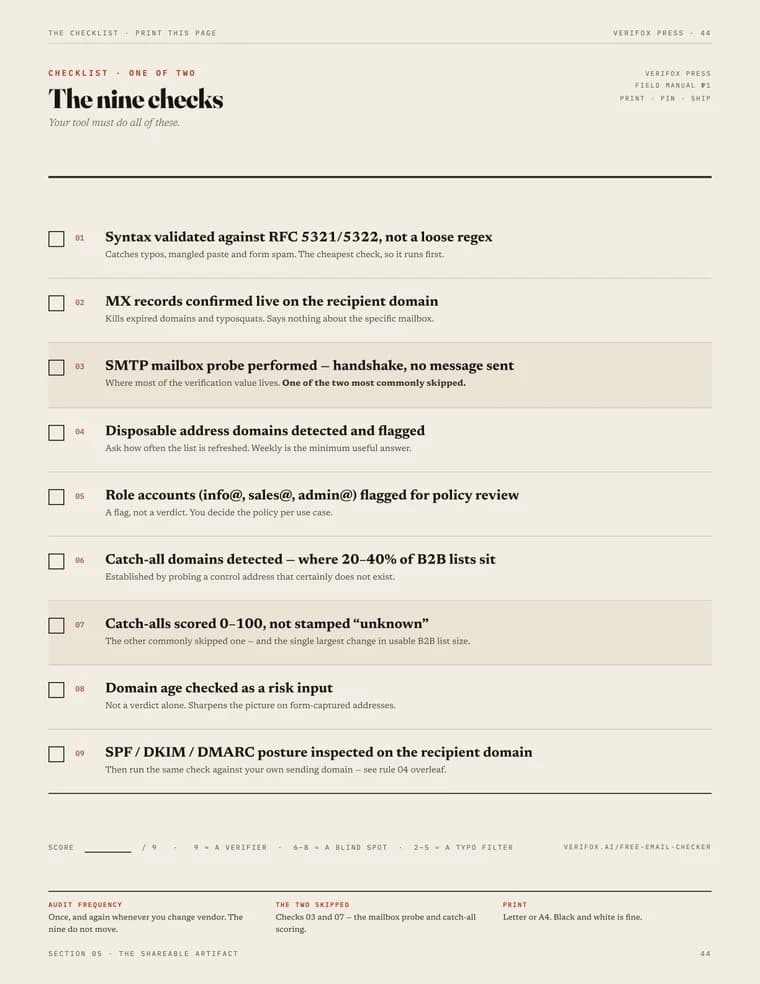
The same nine-check pipeline as the paid API runs on every address, free or not.
Your bounce rate is the receipt, not the bill. The real charge lands on the reputation that decides whether your next send reaches the inbox at all.

100% privacy. The manual lands in your inbox, unsubscribe anytime.
Trusted by 500,000+ leading GTM teams of all sizes
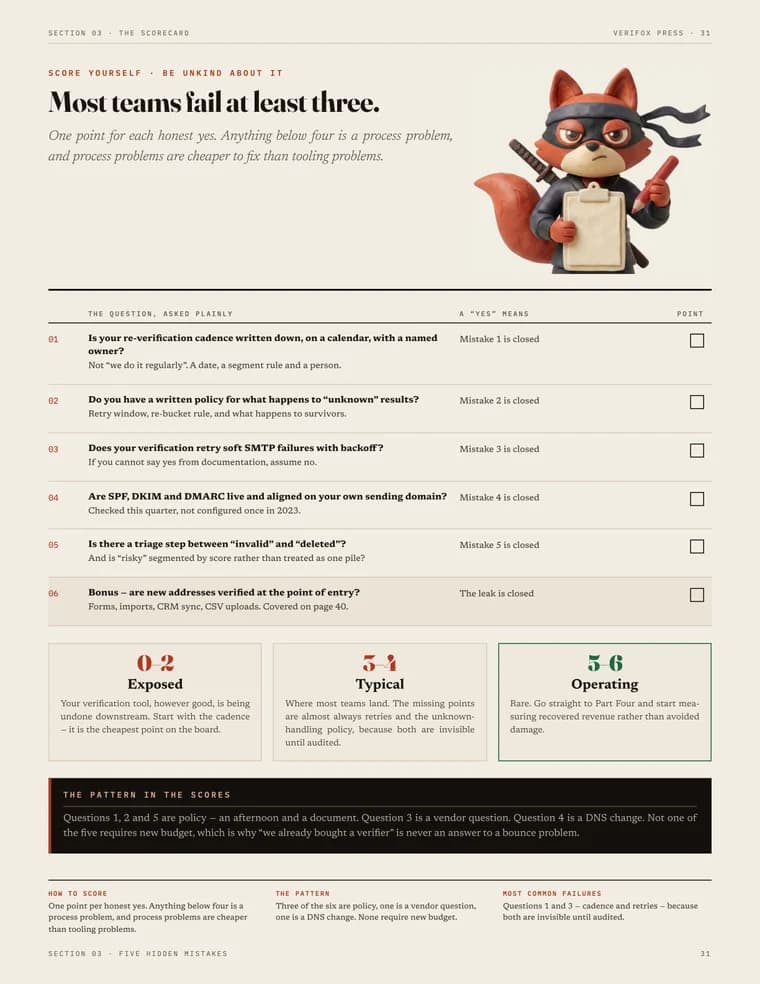
Seven parts, fifty-six pages. Open any one of them — the cover page on the left, what it covers on the right.

Part One · Summary
Your list is decaying right now — and almost nobody measures it. Not because the number is hard to get, but because no one has ever been asked for it.
Pages 10–16
The manual explains these checks one at a time. Here is what they return — the exchange, the response codes, the verdict.
03 · WIRE. SMTP handshake. [email protected], score 100 Valid, verified in 280ms. connect: 220. EHLO: 250 Hello. MAIL FROM: 250 Sender OK. RCPT TO: 250 2.1.5 Recipient OK. the reply the verdict turns on. Mailbox proven. Syntax Valid format, MX Record Microsoft 365, SMTP Connect Connected, Inbox Exists Confirmed, Catch-All Validates recipients, Disposable Legitimate domain, Role Address Personal address, Free Provider Business domain, Domain Age 1y old, SPF Record found, DMARC Policy found, DKIM Signature found.
We did not write this manual from research. We wrote it from the engine — the same nine checks that run on every address passing through Verifox, free tier and paid API alike.
The same nine-check pipeline as the paid API runs on every address, free or not.
Verify your first emails right here, no account, no card.
Bulk CSV in, verified list out. Same speed on every plan.
Every address comes back already checked, with a confidence score.
Validated on a 10,000-address mixed benchmark including catch-all domains.
1,000 free on signup. 2,500 with a work email. Pay as you go after.
Processed in memory, dropped on response. SOC 2 · GDPR · CCPA.
Fifty-six pages, nine checks, one printable audit. A name and a work email, and it lands in your inbox.
100% privacy. The manual lands in your inbox, unsubscribe anytime.